



How to Enhance Platform Stability and Improve Loading/Unloading Continuity in Seamless Warehouse Operations with Hidden Folding Tailgates?
Release Time : 2026-05-18
In modern logistics transportation and warehousing management systems, hidden folding tailgates are widely used in urban distribution, cold chain transportation, and warehouse loading/unloading scenarios due to their high space utilization, ease of operation, and strong vehicle integrity. Especially in operational environments requiring seamless connection between warehouses and trucks, the tailgate not only handles cargo lifting but also directly impacts loading/unloading efficiency and transportation continuity. Insufficient platform stability can easily lead to swaying, misalignment, or uneven connections during loading and unloading, thus affecting cargo handling safety and overall logistics efficiency.
1. Optimize Tailgate Structure to Improve Overall Load-Bearing Stability
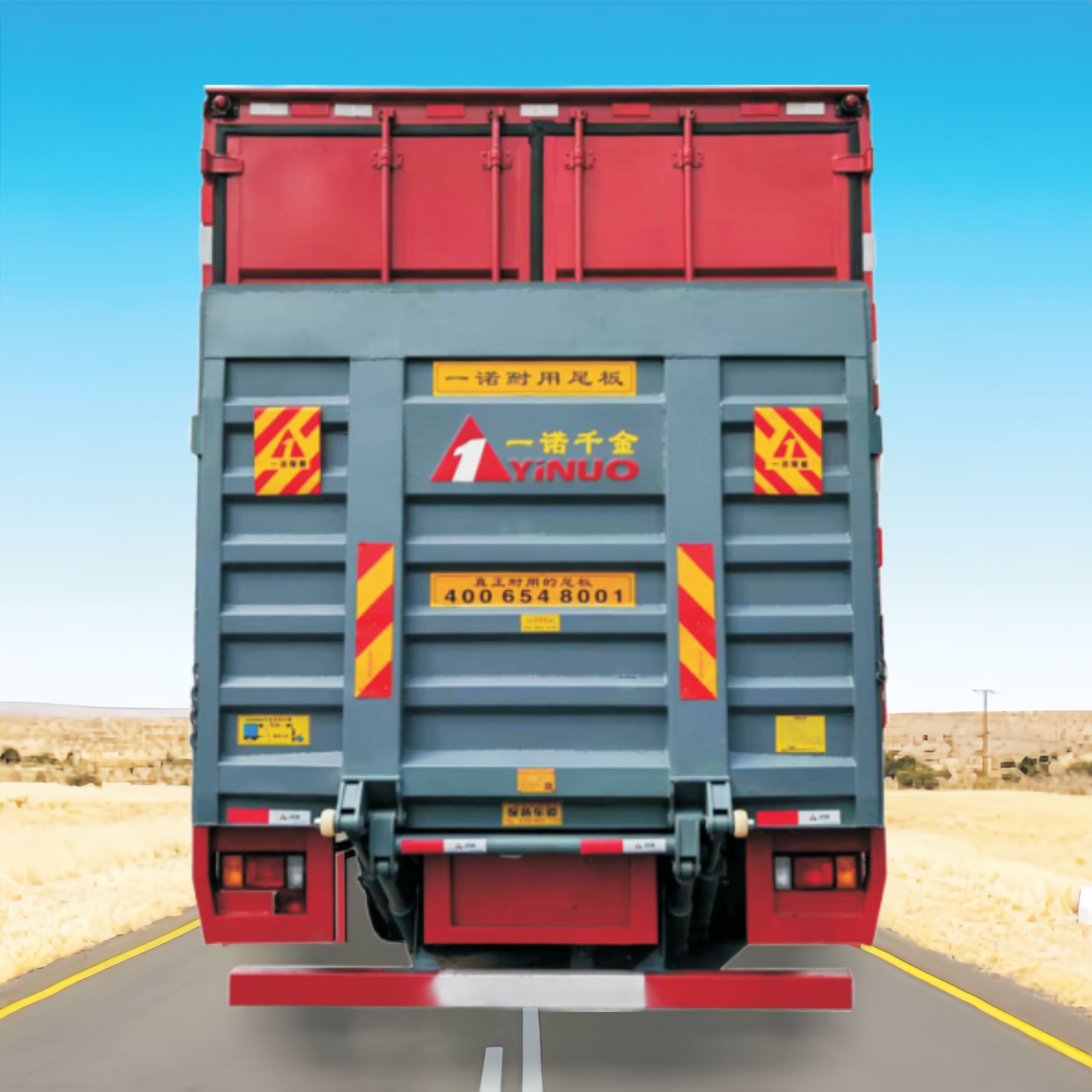
During frequent loading and unloading, hidden folding tailgates need to withstand the pressure from forklifts, handcarts, and the continuous movement of small to medium-sized goods. Insufficient structural strength can easily cause platform deformation or swaying. Therefore, during the design process, it is necessary to strengthen the main frame and supporting structure to improve the overall load-bearing capacity of the tailgate. For example, the use of high-strength steel and thickened load-bearing beams effectively distributes stress across the platform, reducing localized platform subsidence. Simultaneously, optimizing the folding connection points improves the overall stability of the tailgate after it unfolds, ensuring the loading and unloading platform remains stable and reliable over long-term use.
2. Enhancing Hydraulic System Stability for Continuous Operation
The hydraulic system is a crucial core component of the hidden folding tailgate, enabling its lifting function. Unstable hydraulic operation can lead to uneven lifting speeds, platform vibration, or even stalling, affecting the continuity of loading and unloading. Therefore, the tailgate system requires a more stable hydraulic drive structure with a reasonable match between cylinder output pressure and lifting speed. Some high-performance tailgates also incorporate buffer control functions, allowing the platform to decelerate smoothly when approaching the ground or truck bed height, reducing cargo displacement due to impact. A stable hydraulic system not only improves loading and unloading efficiency but also reduces long-term equipment wear and tear.
3. Enhancing Warehouse Docking Accuracy and Reducing Loading and Unloading Gaps
During seamless warehouse docking operations, the flatness between the tailgate platform and the warehouse platform directly affects the continuity of cargo transportation. If there are height differences or gaps in the connection area, forklifts and handling equipment may easily get stuck or even pose safety hazards when passing through. Therefore, hidden folding tailgates typically employ an adjustable platform design, allowing the tailgate to precisely connect according to different warehouse heights. Simultaneously, by adding an anti-slip platform and edge guiding structures, the stability of the connection after the vehicle is parked is improved, reducing the possibility of misalignment of handling equipment during loading and unloading.
4. Optimized Hidden Design Enhances Transportation Convenience
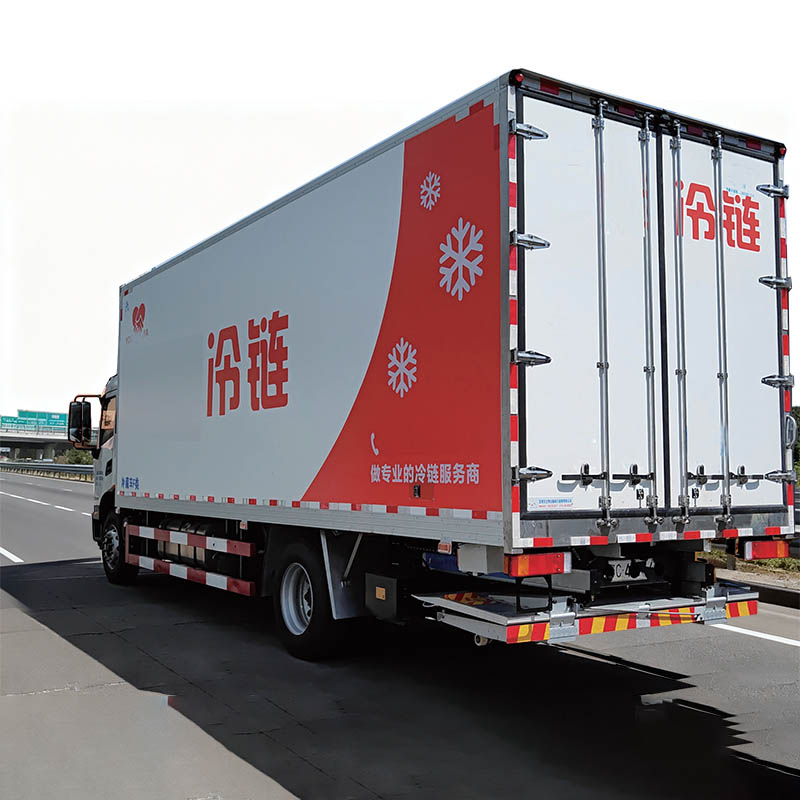
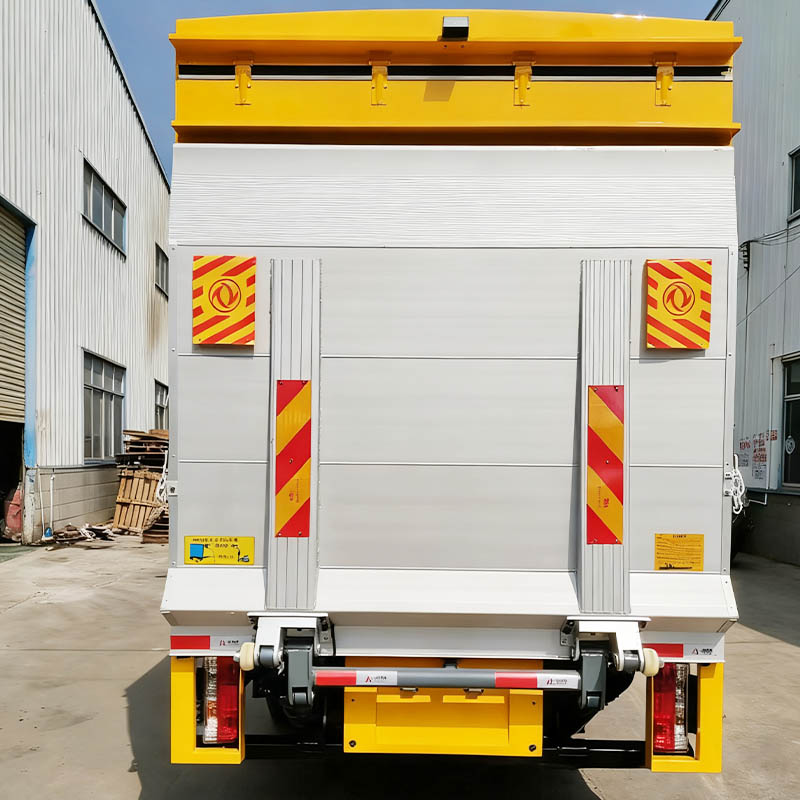
Compared to traditional exposed tailgates, hidden folding tailgates can be stored under the vehicle when not in use, thus reducing the space occupied at the rear. This design not only improves the overall aesthetics of the vehicle but also reduces the collision risk associated with an exposed tailgate during driving. Especially in urban delivery and warehouse parking environments, the hidden structure improves vehicle maneuverability and parking convenience. Furthermore, since the tailgate does not affect the cargo compartment's sealing when folded, it is particularly suitable for cold chain transportation scenarios, helping to reduce cold air loss and maintain a stable internal temperature in the cargo compartment.
5. Enhancing Logistics Efficiency through Intelligent Control
As the modern logistics industry moves towards intelligentization, hidden folding tailgates are gradually incorporating automated control technology. For example, through wireless remote control, one-button lifting, and intelligent limit systems, drivers can more quickly complete tailgate opening and closing operations, reducing manual adjustment time. Simultaneously, some systems also feature fault alarms and safety locking functions, promptly alerting operators when the tailgate is subjected to abnormal force or is not fully locked, thereby improving overall operational safety. Intelligent control not only improves loading and unloading continuity but also further enhances logistics transportation efficiency.
Overall, to enhance platform stability and improve loading and unloading continuity in seamless warehouse docking operations, hidden folding tailgates require comprehensive optimization in multiple aspects, including structural strength, hydraulic systems, docking accuracy, concealed design, and intelligent control. Only when a good match is achieved between equipment performance and warehousing operation requirements can the high-efficiency and high-stability application requirements of modern logistics transportation be better met.
1. Optimize Tailgate Structure to Improve Overall Load-Bearing Stability
During frequent loading and unloading, hidden folding tailgates need to withstand the pressure from forklifts, handcarts, and the continuous movement of small to medium-sized goods. Insufficient structural strength can easily cause platform deformation or swaying. Therefore, during the design process, it is necessary to strengthen the main frame and supporting structure to improve the overall load-bearing capacity of the tailgate. For example, the use of high-strength steel and thickened load-bearing beams effectively distributes stress across the platform, reducing localized platform subsidence. Simultaneously, optimizing the folding connection points improves the overall stability of the tailgate after it unfolds, ensuring the loading and unloading platform remains stable and reliable over long-term use.
2. Enhancing Hydraulic System Stability for Continuous Operation
The hydraulic system is a crucial core component of the hidden folding tailgate, enabling its lifting function. Unstable hydraulic operation can lead to uneven lifting speeds, platform vibration, or even stalling, affecting the continuity of loading and unloading. Therefore, the tailgate system requires a more stable hydraulic drive structure with a reasonable match between cylinder output pressure and lifting speed. Some high-performance tailgates also incorporate buffer control functions, allowing the platform to decelerate smoothly when approaching the ground or truck bed height, reducing cargo displacement due to impact. A stable hydraulic system not only improves loading and unloading efficiency but also reduces long-term equipment wear and tear.
3. Enhancing Warehouse Docking Accuracy and Reducing Loading and Unloading Gaps
During seamless warehouse docking operations, the flatness between the tailgate platform and the warehouse platform directly affects the continuity of cargo transportation. If there are height differences or gaps in the connection area, forklifts and handling equipment may easily get stuck or even pose safety hazards when passing through. Therefore, hidden folding tailgates typically employ an adjustable platform design, allowing the tailgate to precisely connect according to different warehouse heights. Simultaneously, by adding an anti-slip platform and edge guiding structures, the stability of the connection after the vehicle is parked is improved, reducing the possibility of misalignment of handling equipment during loading and unloading.
4. Optimized Hidden Design Enhances Transportation Convenience
Compared to traditional exposed tailgates, hidden folding tailgates can be stored under the vehicle when not in use, thus reducing the space occupied at the rear. This design not only improves the overall aesthetics of the vehicle but also reduces the collision risk associated with an exposed tailgate during driving. Especially in urban delivery and warehouse parking environments, the hidden structure improves vehicle maneuverability and parking convenience. Furthermore, since the tailgate does not affect the cargo compartment's sealing when folded, it is particularly suitable for cold chain transportation scenarios, helping to reduce cold air loss and maintain a stable internal temperature in the cargo compartment.
5. Enhancing Logistics Efficiency through Intelligent Control
As the modern logistics industry moves towards intelligentization, hidden folding tailgates are gradually incorporating automated control technology. For example, through wireless remote control, one-button lifting, and intelligent limit systems, drivers can more quickly complete tailgate opening and closing operations, reducing manual adjustment time. Simultaneously, some systems also feature fault alarms and safety locking functions, promptly alerting operators when the tailgate is subjected to abnormal force or is not fully locked, thereby improving overall operational safety. Intelligent control not only improves loading and unloading continuity but also further enhances logistics transportation efficiency.
Overall, to enhance platform stability and improve loading and unloading continuity in seamless warehouse docking operations, hidden folding tailgates require comprehensive optimization in multiple aspects, including structural strength, hydraulic systems, docking accuracy, concealed design, and intelligent control. Only when a good match is achieved between equipment performance and warehousing operation requirements can the high-efficiency and high-stability application requirements of modern logistics transportation be better met.