



How can the connection structure between the vehicle tailgate and the carriage adapt to the vibration environment of cold chain transportation?
Release Time : 2026-03-26
In cold chain transportation, the connection structure between the vehicle tailgate and the cargo compartment needs to be designed in multiple ways to adapt to the vibration environment, ensuring sealing, structural stability, and durability to prevent cold air leakage or component damage due to vibration. Its core design logic revolves around material selection, structural optimization, cushioning mechanisms, and enhanced sealing to cope with the continuous mechanical impact and temperature fluctuations during transportation.
Material selection is fundamental to the connection structure's vibration adaptability. The connection components between the vehicle tailgate and the cargo compartment must use high-strength, fatigue-resistant materials, such as stainless steel or aluminum alloys. These materials maintain sufficient toughness even at low temperatures, preventing breakage due to embrittlement. Simultaneously, the surfaces of the connectors need anti-corrosion treatment to prevent corrosion from condensation or road salt spray, extending their service life. For example, key components such as hinges and locks are often made of galvanized steel or stainless steel to ensure they are not easily deformed during long-term vibration.
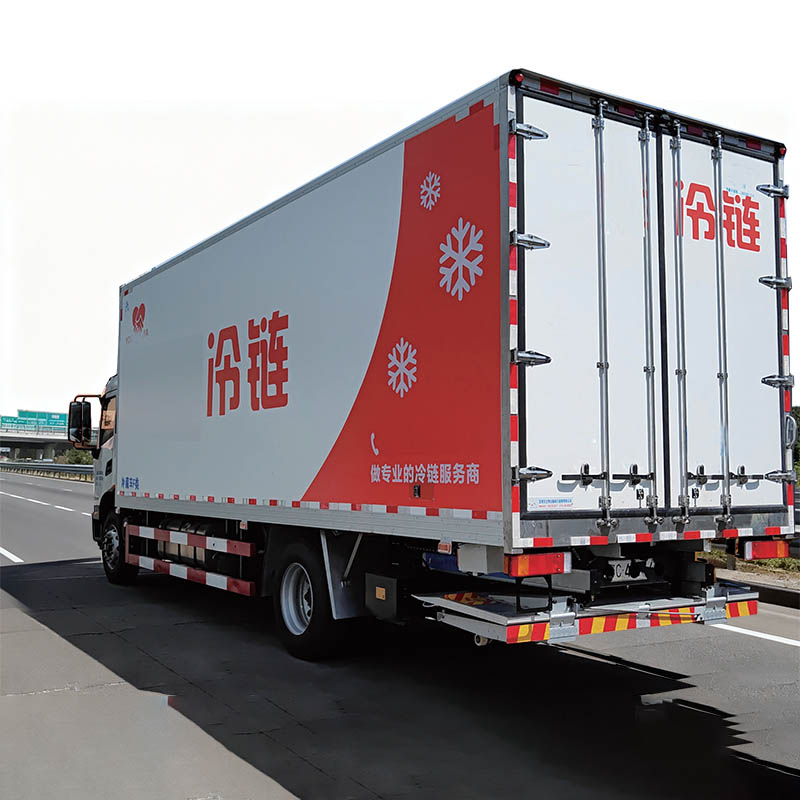
Structural optimization is key to improving vibration resistance. The connection between the tailgate and the cargo compartment typically employs a multi-point fixing design, using multiple hinges or locks to distribute vibration energy and avoid excessive stress at a single point. For example, some refrigerated truck tailgates use a two-door, single-opening hinged structure. Each door is connected to the cargo compartment via multiple hinges, forming a stable triangular force-bearing system to reduce displacement during vibration. Furthermore, elastic elements, such as rubber bushings or springs, are often embedded in the connecting structure to absorb vibration energy through deformation, reducing the direct impact on the tailgate and cargo compartment.
The design of a buffer mechanism can further reduce the impact of vibration on the tailgate. When the vehicle tailgate closes, a buffer device is needed to mitigate the impact force and prevent displacement of the sealing strip or structural deformation due to severe collisions. Common buffer designs include hydraulic buffer rods, pneumatic support rods, or rubber buffer blocks. These devices absorb energy at the moment the tailgate closes, preventing direct collision between metal parts. For example, some high-end refrigerated truck tailgates are equipped with a hydraulic buffer system, which achieves smooth closing through the resistance of oil flow, maintaining structural stability even with frequent opening and closing.
Strengthening the seal is the core measure to prevent cold air leakage. Vibration can cause gaps between the sealing strip and the cargo compartment or tailgate; therefore, the seal design must balance flexibility and durability. Modern refrigerated trucks typically employ a double-layer sealing structure: an outer rigid sealing strip and an inner soft sealant, providing dual protection to reduce cold air leakage. The sealing strip material must possess anti-aging properties, such as silicone or EPDM rubber, which maintain elasticity at low temperatures, preventing hardening and seal failure. Furthermore, some designs embed a metal skeleton within the sealing strip to enhance its resistance to deformation, ensuring consistent contact with the contact surface during vibration.
Modular design of the connection structure improves maintenance convenience. During long-term vibration, some connecting components may wear due to fatigue. Modular design allows for quick replacement of damaged parts, reducing downtime. For example, hinges and locks often use standardized interfaces, eliminating the need to disassemble the entire vehicle tailgate during maintenance; only the replacement of specific components restores functionality. Additionally, modular design facilitates upgrades and optimizations, such as replacing traditional mechanical locks with electronic locks, improving security while reducing the impact of vibration on the locks.
The application of vibration monitoring and early warning systems can detect potential problems in advance. Some high-end refrigerated trucks are equipped with vibration sensors that monitor the amplitude and frequency of vibration at the connection between the tailgate and the cargo compartment in real time. When the data exceeds a threshold, the system issues a warning, prompting maintenance personnel to check the connection structure or the condition of the sealing strips. This proactive maintenance mode can avoid sudden failures caused by vibration and ensure the continuity of cold chain transportation.
The connection structure between the vehicle tailgate and the cargo compartment is effectively adapted to the vibration environment of cold chain transportation through multiple dimensions such as material optimization, structural reinforcement, cushioning design, enhanced sealing, modular maintenance, and intelligent monitoring. These designs not only improve the durability and sealing of the vehicle tailgate but also reduce energy consumption and cargo damage in cold chain transportation, providing a reliable guarantee for the efficient operation of cold chain logistics.