
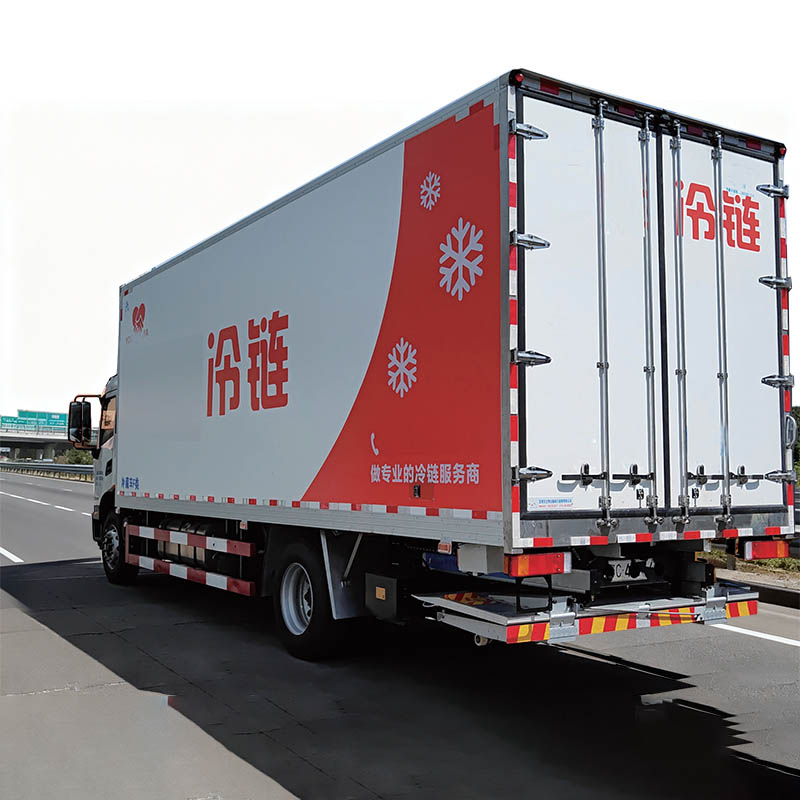
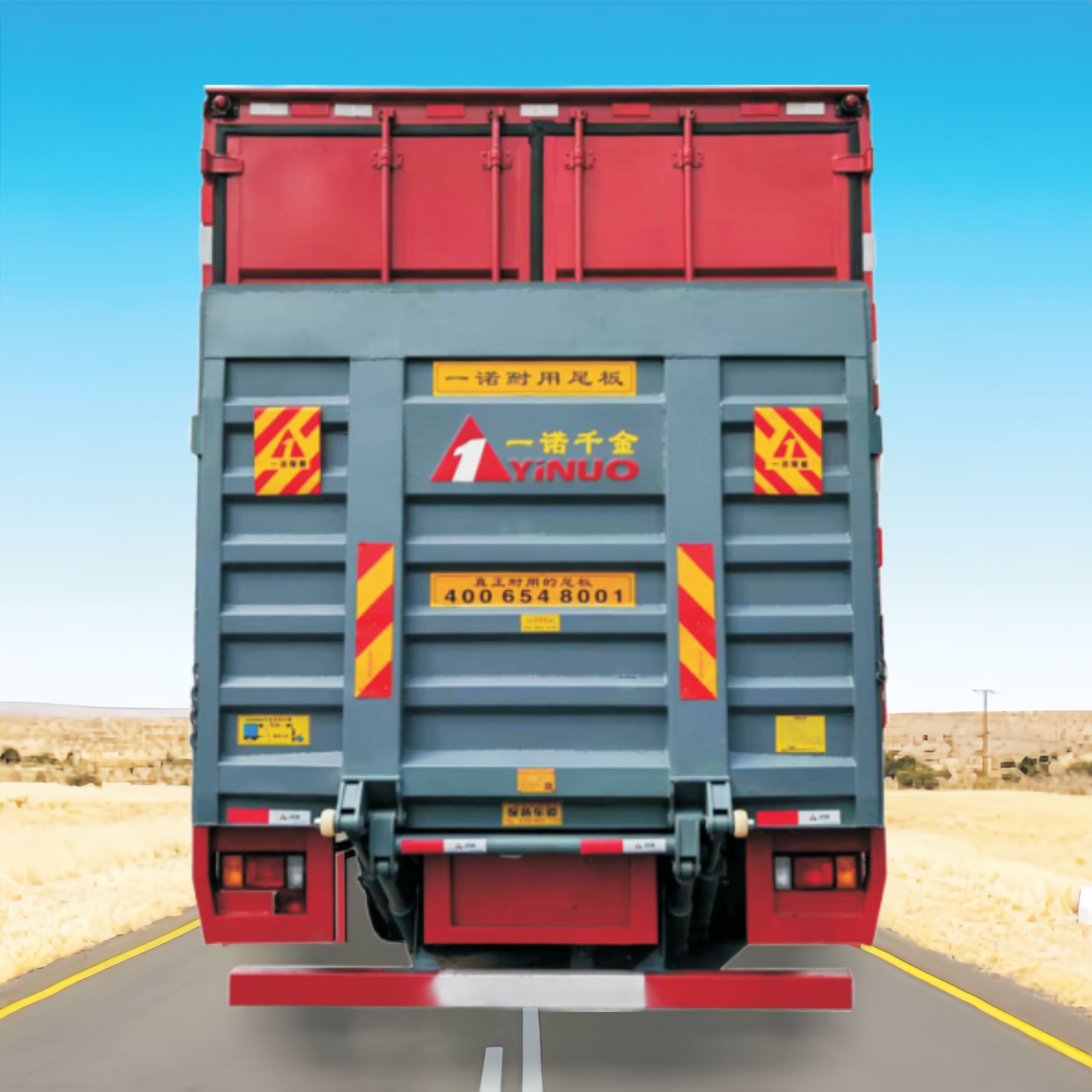

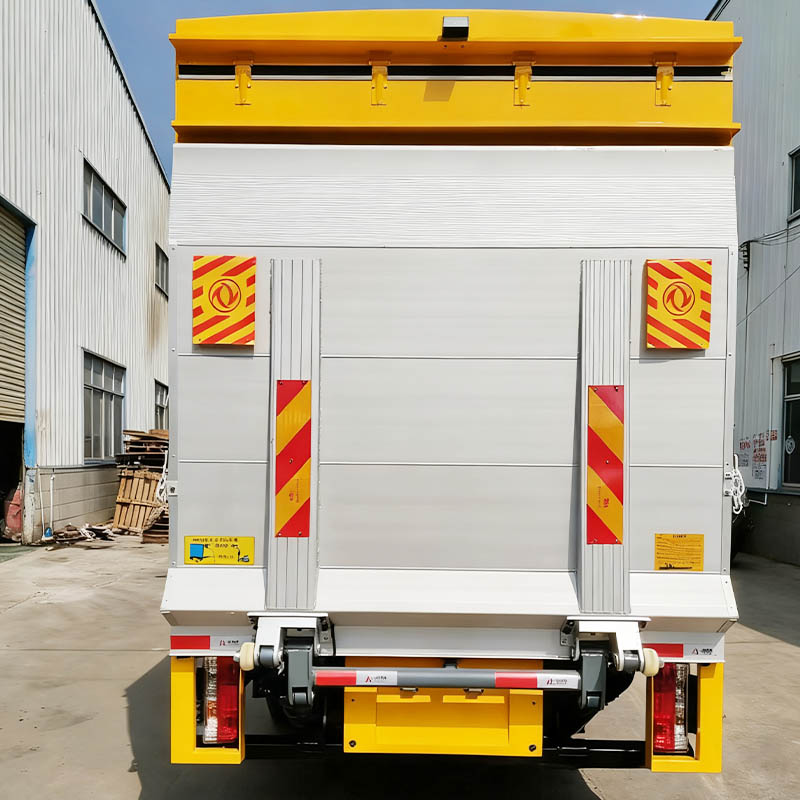


How can the lifting capacity of a heavy-duty lifting tailgate be reasonably matched with the overall load-bearing capacity of the vehicle?
Release Time : 2026-03-20
As a key component of special vehicles, the heavy-duty lifting tailgate's lifting capacity must be matched with the vehicle's overall load-bearing capacity. This requires comprehensive consideration from multiple dimensions, including structural design, material selection, power configuration, safety redundancy, usage scenarios, and regulatory standards, to ensure a balance between operational efficiency and safety.
In terms of structural design, the lifting capacity of the heavy-duty lifting tailgate must be closely coordinated with the rigidity and strength of the vehicle chassis. When lifting heavy loads, the tailgate applies vertical loads and lateral moments to the rear of the vehicle. If the chassis structure cannot effectively distribute these stresses, it may lead to frame deformation or even breakage. Therefore, during the vehicle design phase, finite element analysis is needed to optimize the layout and cross-sectional shape of the frame's longitudinal and transverse beams. Simultaneously, the connection between the tailgate and the vehicle body must utilize high-strength hinges or support mechanisms to ensure a clear load transfer path and avoid localized stress concentration. Furthermore, the tailgate's opening angle and lifting height must be compatible with the cargo box height and cargo dimensions to prevent the risk of tipping over due to insufficient operating space.
Material selection directly affects the tailgate's self-weight and load-bearing limit. High-strength alloy steel, due to its excellent tensile strength and fatigue resistance, is often used in the manufacture of the main structure of the tailgate. However, a balance must be struck between material thickness and weight—too thick a material increases the vehicle's axle load, while too thin a material reduces safety. Some high-end models use composite materials or aluminum alloys to replace some steel components to reduce weight and improve corrosion resistance, but this requires structural reinforcement or an increased safety factor to compensate for the material's insufficient strength. Surface treatment processes such as hot-dip galvanizing and sandblasting can extend the tailgate's service life under harsh conditions, indirectly ensuring long-term load-bearing capacity.
The power configuration must be dynamically matched to the tailgate's lifting capacity. The hydraulic system is the core power source for tailgate lifting, and its pump station flow rate and cylinder pressure must be designed according to the tailgate's maximum load. Insufficient power may lead to a slow lifting speed or stalling midway; excessive power increases energy consumption and wear on hydraulic components. Furthermore, the power system must be equipped with overload protection devices, such as pressure relays or balance valves, to automatically cut off power when the load exceeds the rated value, preventing the tailgate from falling uncontrollably. Some models also employ dual-pump confluence or variable pump technology, automatically adjusting power output according to load size to balance efficiency and energy saving.
Safety redundancy design is a crucial aspect of the matching process. Heavy-duty lifting tailgates typically require a certain safety margin, i.e., the ratio of rated load to actual maximum load capacity, to cope with cargo imbalance, impact loads, or extreme working conditions. An excessively high safety margin reduces equipment utilization, while an excessively low margin increases the risk of accidents; it is generally set according to industry standards. Furthermore, the tailgate must be equipped with limit devices, anti-tipping mechanisms, and emergency braking systems to ensure cargo stability even in the event of power failure during lifting, lowering, or hovering. The vehicle as a whole also needs to prevent a decrease in overall vehicle stability due to tailgate operation through methods such as center of gravity optimization and axle load distribution adjustment.
The diversity of usage scenarios demands flexible matching solutions. For example, in scenarios involving frequent loading and unloading of heavy goods, such as ports and mines, tailgates need to possess high durability and rapid response capabilities, and the vehicle chassis needs a reinforced suspension system to withstand long-term heavy loads. In urban logistics, tailgates may need to balance lightweight design and low noise, while the vehicle needs optimized powertrain matching to adapt to frequent starts and stops. Therefore, the tailgate performance parameters must be defined according to typical operating scenarios during the matching process, and modular design must be used to achieve rapid switching between different configurations.
Regulations and standards are rigid constraints on matching. Various countries have strict regulations on the manufacture, installation, and use of heavy-duty lifting tailgates, involving safety factors, testing methods, and labeling requirements. For example, my country's "Technical Requirements for Installation and Use of Vehicle Lifting Tailgates" clearly states that the tailgate installation must not affect the vehicle's driving stability, and its load-bearing capacity must be verified through type testing. Vehicle manufacturers must ensure that the tailgate and vehicle matching scheme complies with relevant regulations to avoid vehicles failing annual inspections or incurring legal liabilities due to illegal modifications.
Matching the lifting capacity of a heavy-duty lifting tailgate with the overall load-bearing capacity of the vehicle is a systematic project that requires collaboration across the entire chain from design to end-user. Through structural optimization, material upgrades, precise power configuration, safety redundancy design, scenario-based adaptation, and compliance verification, the optimal balance between tailgate performance and vehicle load-bearing capacity can be achieved, ultimately improving the reliability and economy of special vehicles in complex working conditions.