



How can a heavy-duty lifting tailgate ensure stable cargo load-bearing capacity even on bumpy roads during heavy machinery transportation?
Release Time : 2026-01-27
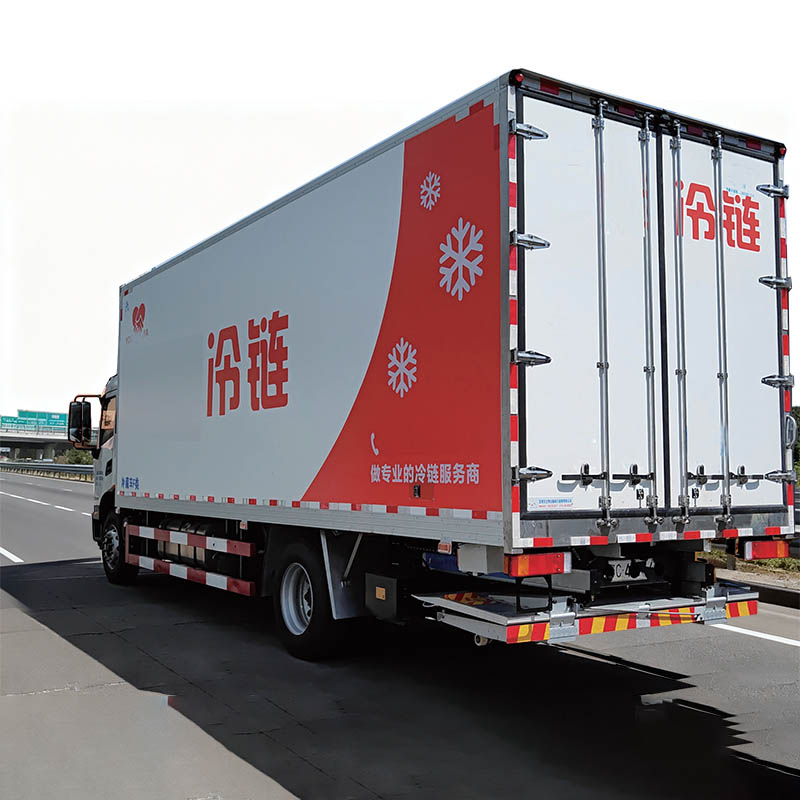
Heavy-duty lifting tailgates, as hydraulic lifting platforms integrated into the rear of transport vehicles, are widely used in loading and unloading operations of large construction machinery, mining equipment, port containers, and special engineering vehicles. However, their function extends beyond loading and unloading—during long-distance transportation, the tailgate often serves as a fixed cargo platform, carrying several tons or even tens of tons of heavy cargo across highways, rural dirt roads, and even temporary construction site passages. Ensuring the tailgate structure remains stable, undeformed, and unfailed in the face of complex and varied bumpy road conditions becomes a core issue for ensuring transportation safety.
1. High-strength Integrated Frame: The Mechanical Foundation for Torsional and Vibration Resistance
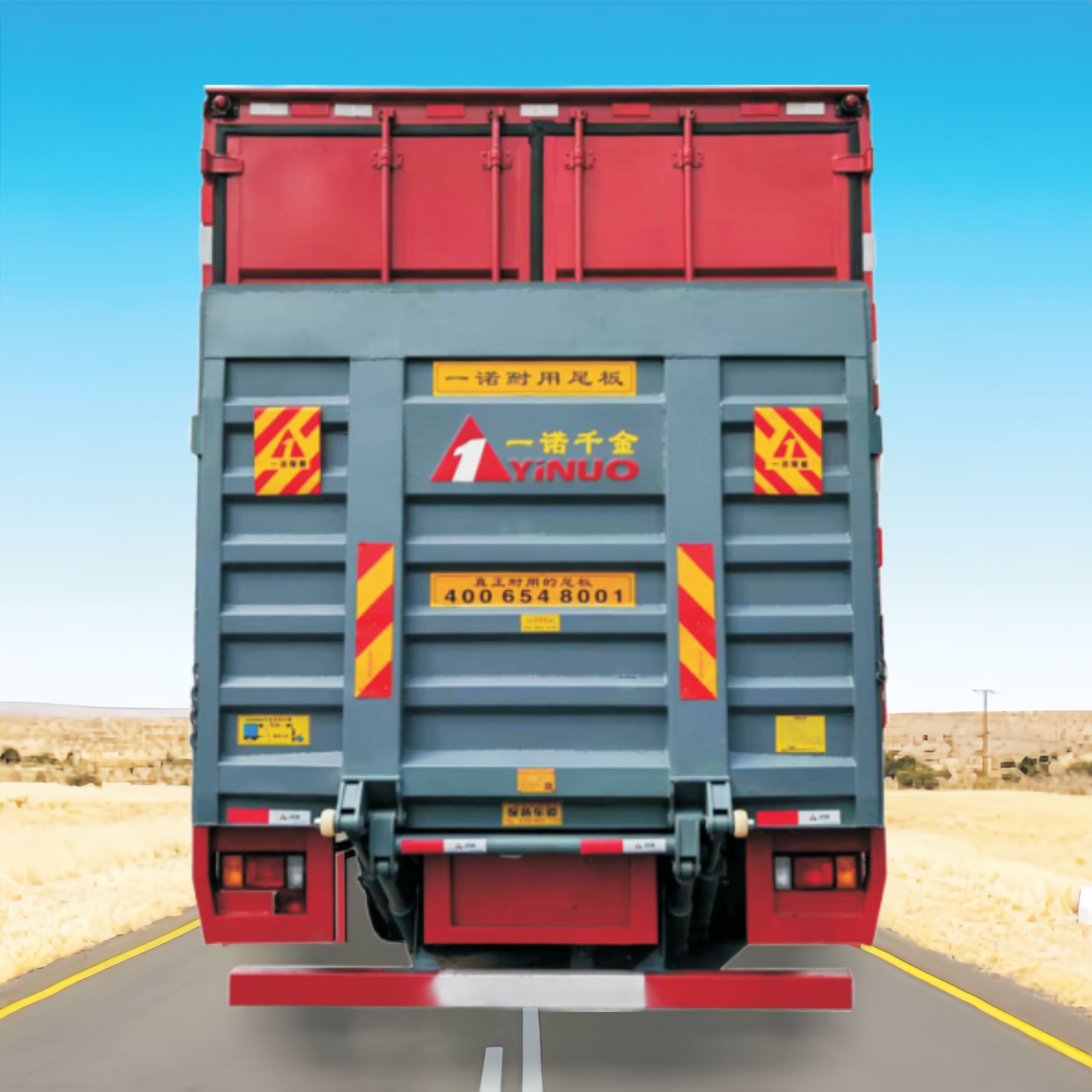
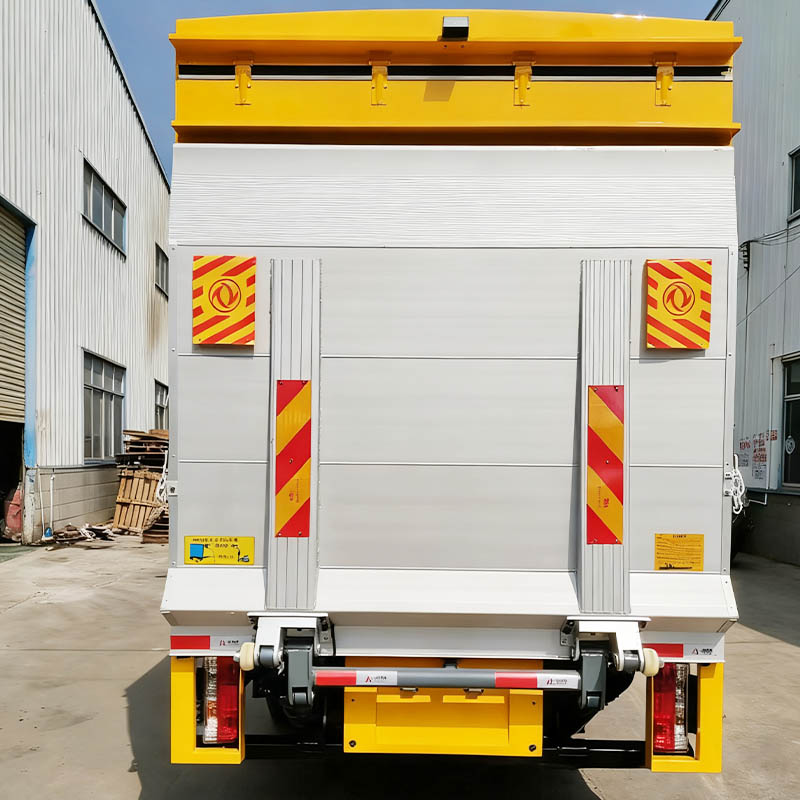
The heavy-duty lifting tailgate is integrally welded from high-yield-strength alloy steel. The main beam, cross braces, and hinged supports form a closed box-type or I-beam structure, greatly improving bending and torsional stiffness. Key load-bearing components are optimized through finite element analysis to avoid stress concentration. Even when the vehicle experiences severe torsion while traversing speed bumps, potholes, or curves, the tailgate frame effectively distributes dynamic loads, preventing localized buckling or weld cracking. Some high-end models also incorporate reinforcing ribs and internal compartment designs to further suppress metal fatigue caused by high-frequency vibrations.
2. Multiple Mechanical Locking Systems: Rigid Connection During Transport
During transport, the tailgate must switch from a "movable working state" to a "rigid load-bearing state." To this end, the system is equipped with multiple redundant locking mechanisms:
Hydraulic locking valve: Cuts off the oil circuit, preventing accidental retraction of the hydraulic cylinder;
Mechanical pins or wedge-shaped locking blocks: Automatically or manually insert into the load-bearing bracket after the tailgate is fully retracted, rigidly connecting the tailgate to the frame and completely eliminating hinge clearance;
Auxiliary support rods or folding arm self-locking: Ensures no lateral sway.
These locking devices are typically linked to the cab via sensors for confirmation. Only after all locking mechanisms are confirmed in place is the vehicle allowed to start and move, eliminating the risk of "unlocked while loaded" from the outset.
3. Vibration Damping and Dynamic Adaptation Design: Mitigating Road Impacts
Even with a robust structure, continuous bumps can still cause cargo shifting or loosening of connections. Therefore, tailgate platforms often integrate vibration damping measures: such as laying high-friction coefficient anti-slip rubber pads or embedded T-slots on the cargo contact surface, combined with strap holes or hydraulic clamps for securing the equipment; some tailgates are equipped with polyurethane buffer blocks or hydraulic shock absorbers at the bottom to absorb vertical impact energy when retracted. Furthermore, the hinge points between the tailgate and the vehicle body use large-diameter self-lubricating spherical bearings, allowing for slight angle deflection to accommodate frame deformation and avoid rigid collisions.
4. Corrosion Protection and Sealing Technology: Ensuring Long-Term Reliability
In highly corrosive and dusty environments such as ports and mines, the hydraulic lines, pins, and electronic control components of the tailgate are prone to aging and failure. Therefore, key components are treated with galvanizing, powder coating, or Dacromet coating; the hydraulic system uses fully enclosed rigid pipes and IP67 waterproof connectors; and control wiring is protected by flexible metal hoses. These measures ensure that the locking and load-bearing functions remain reliable even under harsh working conditions and long-term use, preventing sudden malfunctions during transportation due to corrosion or water ingress.
5. Intelligent Monitoring and Safety Redundancy: Proactive Risk Defense
The new generation of heavy-duty lifting tailgates gradually incorporates intelligent monitoring technology: tilt sensors, load sensors, and vibration detection modules assess the tailgate's status in real time. If the system detects abnormal displacement or locking failure, it can immediately trigger audible and visual alarms and even limit vehicle speed. This "perception-early warning-intervention" mechanism adds a digital defense line to the safety of goods during bumpy transportation.
The stability of the heavy-duty lifting tailgate during transportation does not rely on a single technology, but is the result of the combined effects of structural strength, mechanical locking, dynamic adaptation, and intelligent protection. It is not only a loading and unloading tool but also a mobile load-bearing platform. Through rigorous engineering design and multiple safety safeguards, the heavy-duty lifting tailgate keeps massive objects weighing tens of tons "rock-solid" on rugged roads, providing solid support for the safe and efficient operation of heavy logistics.
1. High-strength Integrated Frame: The Mechanical Foundation for Torsional and Vibration Resistance
The heavy-duty lifting tailgate is integrally welded from high-yield-strength alloy steel. The main beam, cross braces, and hinged supports form a closed box-type or I-beam structure, greatly improving bending and torsional stiffness. Key load-bearing components are optimized through finite element analysis to avoid stress concentration. Even when the vehicle experiences severe torsion while traversing speed bumps, potholes, or curves, the tailgate frame effectively distributes dynamic loads, preventing localized buckling or weld cracking. Some high-end models also incorporate reinforcing ribs and internal compartment designs to further suppress metal fatigue caused by high-frequency vibrations.
2. Multiple Mechanical Locking Systems: Rigid Connection During Transport
During transport, the tailgate must switch from a "movable working state" to a "rigid load-bearing state." To this end, the system is equipped with multiple redundant locking mechanisms:
Hydraulic locking valve: Cuts off the oil circuit, preventing accidental retraction of the hydraulic cylinder;
Mechanical pins or wedge-shaped locking blocks: Automatically or manually insert into the load-bearing bracket after the tailgate is fully retracted, rigidly connecting the tailgate to the frame and completely eliminating hinge clearance;
Auxiliary support rods or folding arm self-locking: Ensures no lateral sway.
These locking devices are typically linked to the cab via sensors for confirmation. Only after all locking mechanisms are confirmed in place is the vehicle allowed to start and move, eliminating the risk of "unlocked while loaded" from the outset.
3. Vibration Damping and Dynamic Adaptation Design: Mitigating Road Impacts
Even with a robust structure, continuous bumps can still cause cargo shifting or loosening of connections. Therefore, tailgate platforms often integrate vibration damping measures: such as laying high-friction coefficient anti-slip rubber pads or embedded T-slots on the cargo contact surface, combined with strap holes or hydraulic clamps for securing the equipment; some tailgates are equipped with polyurethane buffer blocks or hydraulic shock absorbers at the bottom to absorb vertical impact energy when retracted. Furthermore, the hinge points between the tailgate and the vehicle body use large-diameter self-lubricating spherical bearings, allowing for slight angle deflection to accommodate frame deformation and avoid rigid collisions.
4. Corrosion Protection and Sealing Technology: Ensuring Long-Term Reliability
In highly corrosive and dusty environments such as ports and mines, the hydraulic lines, pins, and electronic control components of the tailgate are prone to aging and failure. Therefore, key components are treated with galvanizing, powder coating, or Dacromet coating; the hydraulic system uses fully enclosed rigid pipes and IP67 waterproof connectors; and control wiring is protected by flexible metal hoses. These measures ensure that the locking and load-bearing functions remain reliable even under harsh working conditions and long-term use, preventing sudden malfunctions during transportation due to corrosion or water ingress.
5. Intelligent Monitoring and Safety Redundancy: Proactive Risk Defense
The new generation of heavy-duty lifting tailgates gradually incorporates intelligent monitoring technology: tilt sensors, load sensors, and vibration detection modules assess the tailgate's status in real time. If the system detects abnormal displacement or locking failure, it can immediately trigger audible and visual alarms and even limit vehicle speed. This "perception-early warning-intervention" mechanism adds a digital defense line to the safety of goods during bumpy transportation.
The stability of the heavy-duty lifting tailgate during transportation does not rely on a single technology, but is the result of the combined effects of structural strength, mechanical locking, dynamic adaptation, and intelligent protection. It is not only a loading and unloading tool but also a mobile load-bearing platform. Through rigorous engineering design and multiple safety safeguards, the heavy-duty lifting tailgate keeps massive objects weighing tens of tons "rock-solid" on rugged roads, providing solid support for the safe and efficient operation of heavy logistics.