



How do heavy-duty lifting tailgates for automobiles ensure smooth lifting and safe operation while carrying several tons of load?
Release Time : 2026-01-14
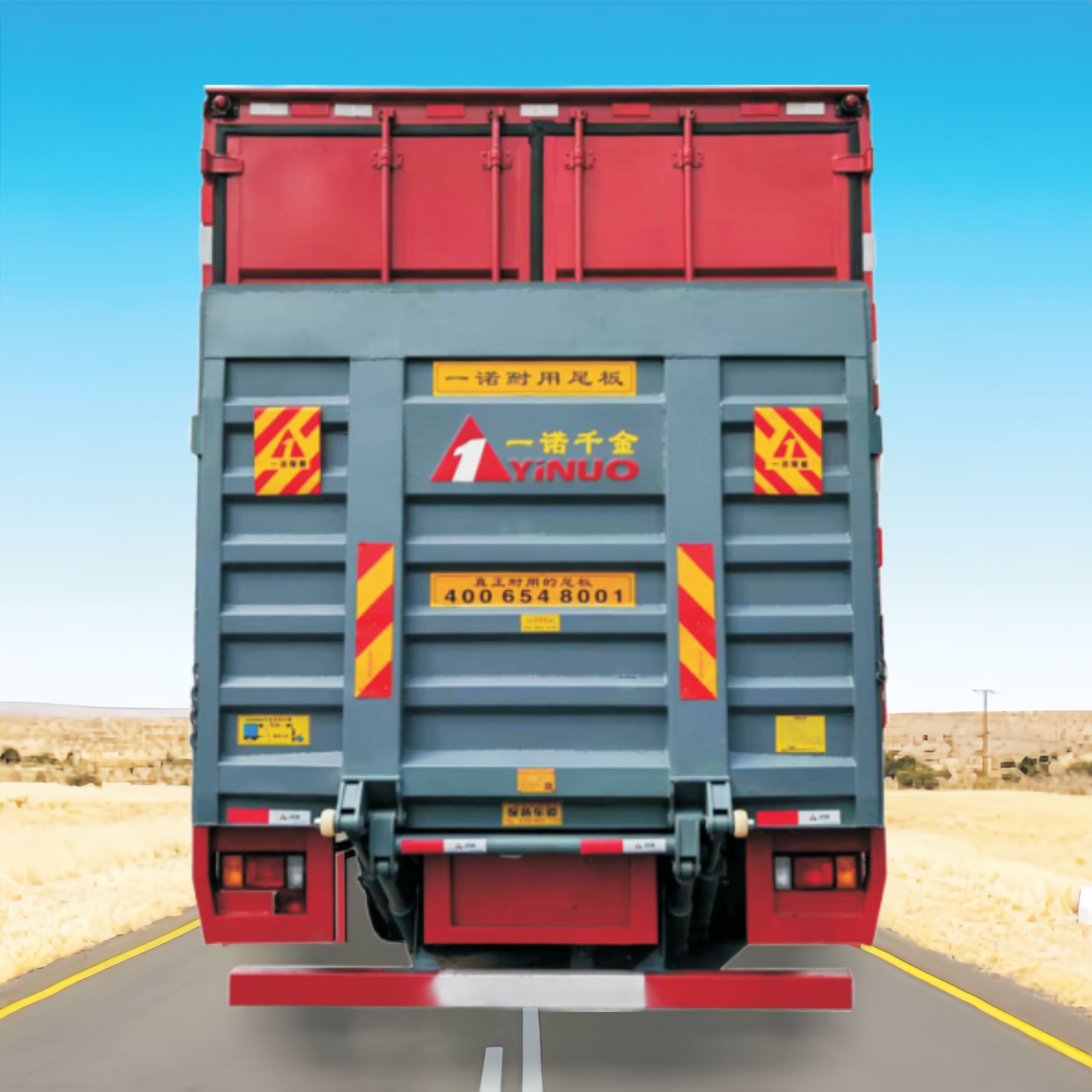
In ports, large-scale construction sites, and special transportation sectors, heavy-duty lifting tailgates for automobiles have become indispensable "mobile loading and unloading platforms" for handling overweight cargo such as excavators, air compressors, and container equipment. Facing extreme loads of 3 to 9 tons, these tailgates not only need to achieve reliable lifting but also must ensure the smoothness of the lifting process and the absolute safety of personnel and equipment under complex working conditions. Behind this is a sophisticated engineering system integrating high-strength structure, intelligent hydraulic control, and multiple safety redundancies.
1. High-strength Alloy Steel Structure: The Physical Foundation of Load-Bearing Capacity
The main frame and platform of the heavy-duty lifting tailgate are made of high-strength low-alloy steel. By optimizing the cross-sectional shape and locally thickening key parts, bending and torsional stiffness are significantly improved. Even when fully loaded with 9 tons of load, the overall deformation is controlled within the millimeter range, avoiding swaying or stress concentration caused by structural flexibility. The platform surface is often covered with anti-slip patterned steel plates or embedded with wear-resistant rubber strips, which enhances friction to prevent equipment slippage and protects tracks or tires from damage.
2. High-Power Hydraulic System: The Core Power for Smooth Lifting
The lifting action is driven by a double-acting multi-stage hydraulic cylinder, combined with a high-flow gear pump and a high-response proportional valve to achieve stepless speed regulation. Operators can precisely control the tailgate's raising and lowering speed via remote control or onboard panel, ensuring smooth start-stop and stable operation even under full load, avoiding damage to the vehicle chassis or cargo from impact loads. The hydraulic circuit has been optimized through fluid dynamics simulation to ensure uniform oil flow, reduce pressure fluctuations, and further improve motion stability.
3. Multiple Safety Protections: Building a "Lifeline" Against Failure
The most crucial aspect of a heavy-duty lifting tailgate. First, each hydraulic cylinder is equipped with a built-in explosion-proof solenoid valve. Under normal operation, this valve allows hydraulic fluid to flow as instructed. If the hydraulic hose ruptures due to aging, wear, or accidental external force, the valve will automatically lock instantly, sealing the cylinder chamber and immediately stopping the tailgate, keeping it firmly suspended in its current position to prevent sudden drops of heavy objects. Second, the system is equipped with mechanical support legs, which must be manually or automatically erected before the tailgate is opened for operation, forming a stable support triangle independent of the vehicle's suspension, significantly reducing the risk of vehicle rollover.
4. Intelligent Protection Mechanism: Proactive Prevention of Overloading and Misoperation
Heavy-duty lifting tailgates generally integrate electronic safety control systems. Pressure sensors monitor the hydraulic system load in real time. Once the load is detected to be close to or exceeding the rated lifting capacity, the system will automatically limit further lifting and trigger an audible and visual alarm, effectively preventing overloading. Some high-end models are also equipped with tilt angle sensors. When the vehicle is parked on uneven ground, causing the tailgate to tilt beyond a safe threshold, the system automatically disables the lifting function to prevent rollover accidents.
5. Ergonomics and Emergency Design: Balancing Efficiency and Fault Tolerance
To adapt to field operations without external power, most tailgates support an emergency manual pump-down function—in case of hydraulic power failure, operators can slowly release hydraulic oil via a hand pump, safely lowering the tailgate and cargo to the ground. Simultaneously, the remote control operating distance is typically over 10 meters, keeping operators away from danger zones and achieving "safety with cargo under control."
The automotive heavy-duty lifting tailgate is far more than a simple lifting platform; it is an intelligent piece of equipment integrating structural mechanics, fluid control, sensing technology, and safety engineering. It supports several tons of weight with its steel frame and employs multiple redundancies to safeguard the safety of every loading and unloading operation. In the modern logistics and engineering field, where efficiency and safety are equally important, this "rock-solid, fortress-like" heavy-duty tailgate is becoming an irreplaceable and reliable arm for special transportation.
1. High-strength Alloy Steel Structure: The Physical Foundation of Load-Bearing Capacity
The main frame and platform of the heavy-duty lifting tailgate are made of high-strength low-alloy steel. By optimizing the cross-sectional shape and locally thickening key parts, bending and torsional stiffness are significantly improved. Even when fully loaded with 9 tons of load, the overall deformation is controlled within the millimeter range, avoiding swaying or stress concentration caused by structural flexibility. The platform surface is often covered with anti-slip patterned steel plates or embedded with wear-resistant rubber strips, which enhances friction to prevent equipment slippage and protects tracks or tires from damage.
2. High-Power Hydraulic System: The Core Power for Smooth Lifting
The lifting action is driven by a double-acting multi-stage hydraulic cylinder, combined with a high-flow gear pump and a high-response proportional valve to achieve stepless speed regulation. Operators can precisely control the tailgate's raising and lowering speed via remote control or onboard panel, ensuring smooth start-stop and stable operation even under full load, avoiding damage to the vehicle chassis or cargo from impact loads. The hydraulic circuit has been optimized through fluid dynamics simulation to ensure uniform oil flow, reduce pressure fluctuations, and further improve motion stability.
3. Multiple Safety Protections: Building a "Lifeline" Against Failure
The most crucial aspect of a heavy-duty lifting tailgate. First, each hydraulic cylinder is equipped with a built-in explosion-proof solenoid valve. Under normal operation, this valve allows hydraulic fluid to flow as instructed. If the hydraulic hose ruptures due to aging, wear, or accidental external force, the valve will automatically lock instantly, sealing the cylinder chamber and immediately stopping the tailgate, keeping it firmly suspended in its current position to prevent sudden drops of heavy objects. Second, the system is equipped with mechanical support legs, which must be manually or automatically erected before the tailgate is opened for operation, forming a stable support triangle independent of the vehicle's suspension, significantly reducing the risk of vehicle rollover.
4. Intelligent Protection Mechanism: Proactive Prevention of Overloading and Misoperation
Heavy-duty lifting tailgates generally integrate electronic safety control systems. Pressure sensors monitor the hydraulic system load in real time. Once the load is detected to be close to or exceeding the rated lifting capacity, the system will automatically limit further lifting and trigger an audible and visual alarm, effectively preventing overloading. Some high-end models are also equipped with tilt angle sensors. When the vehicle is parked on uneven ground, causing the tailgate to tilt beyond a safe threshold, the system automatically disables the lifting function to prevent rollover accidents.
5. Ergonomics and Emergency Design: Balancing Efficiency and Fault Tolerance
To adapt to field operations without external power, most tailgates support an emergency manual pump-down function—in case of hydraulic power failure, operators can slowly release hydraulic oil via a hand pump, safely lowering the tailgate and cargo to the ground. Simultaneously, the remote control operating distance is typically over 10 meters, keeping operators away from danger zones and achieving "safety with cargo under control."
The automotive heavy-duty lifting tailgate is far more than a simple lifting platform; it is an intelligent piece of equipment integrating structural mechanics, fluid control, sensing technology, and safety engineering. It supports several tons of weight with its steel frame and employs multiple redundancies to safeguard the safety of every loading and unloading operation. In the modern logistics and engineering field, where efficiency and safety are equally important, this "rock-solid, fortress-like" heavy-duty tailgate is becoming an irreplaceable and reliable arm for special transportation.