



Can vehicle tailgates provide both safety and efficiency for urban logistics vehicles?
Release Time : 2026-02-10
In high-frequency logistics scenarios such as urban delivery, express delivery, and cold chain logistics, vehicle tailgates have long transcended their basic function of "simple opening and closing," evolving into key components affecting operational efficiency, safety, and even overall fuel economy. Facing dozens of loading and unloading operations daily, load requirements of 1-3 tons, and complex and ever-changing urban road environments, vehicle tailgates, through structural innovation, material optimization, and intelligent integration, are truly bringing both safety and efficiency to urban logistics vehicles.
1. Improved Loading and Unloading Efficiency and Reduced Destination Time
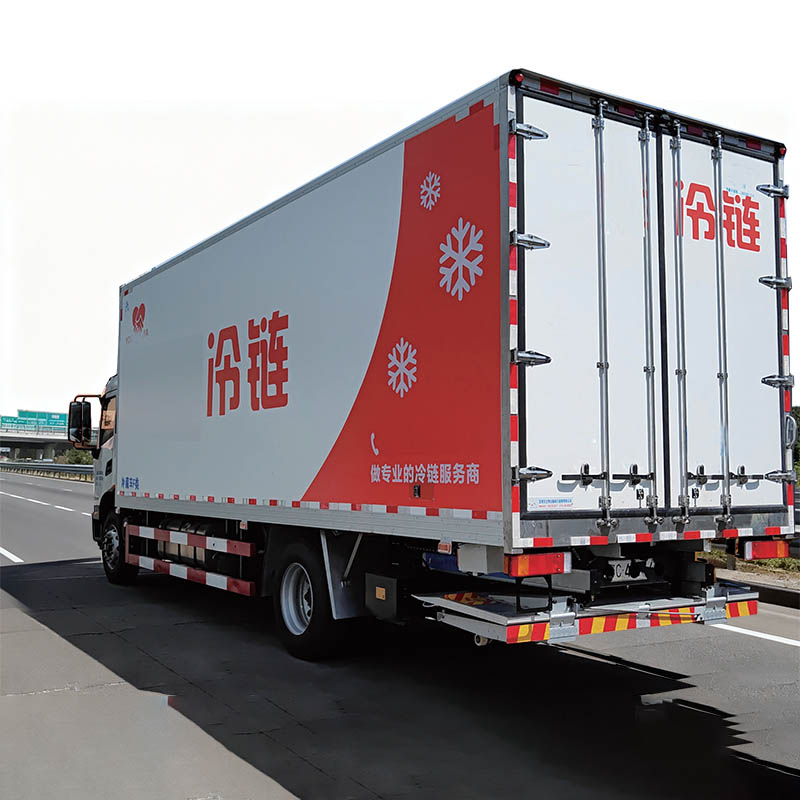
One of the core pain points of urban logistics is "tight time windows and limited parking." Traditional manual tailgates require manual climbing and laborious opening, which is not only time-consuming but also prone to cargo slippage due to improper operation. Logistics vehicles equipped with hydraulic or electric lifting tailgates can achieve smooth one-button lifting and lowering under driver control, lowering the cargo floor to ground level, allowing pallet trucks and trolleys to directly enter and exit the cargo area. This design significantly reduces handling steps, shortening single loading and unloading time by over 30%, making it particularly suitable for convenience stores and community outlets without loading docks. For "last-mile" delivery, the quick-opening side tailgate or double-opening tailgate allows for simultaneous operation by two people, further improving turnaround efficiency.
2. Enhanced Operational Safety and Reduced Risk of Work-Related Injuries
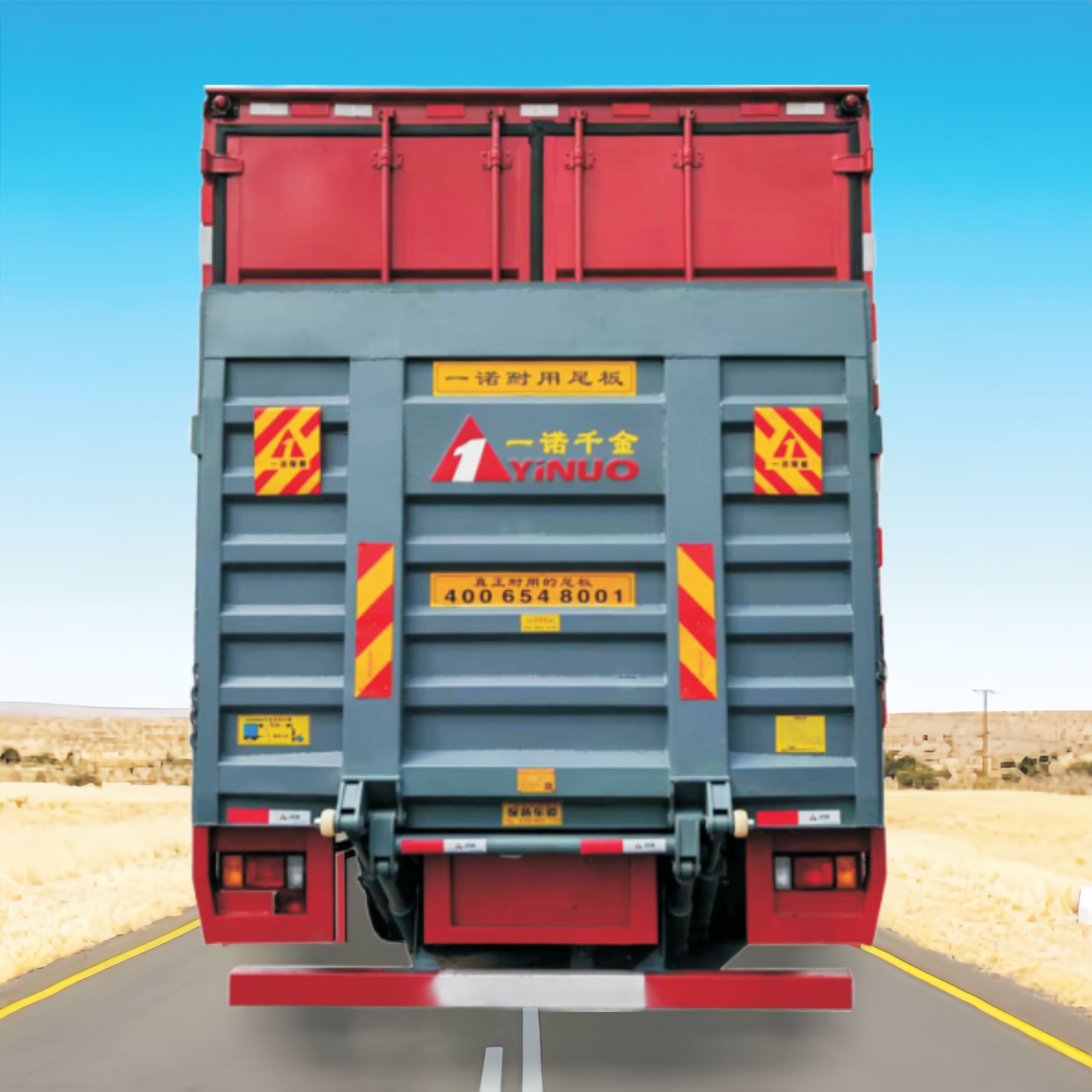
According to industry statistics, the logistics loading and unloading process is a high-incidence area for occupational injuries, with back sprains and falls accounting for a very high percentage. The vehicle tailgate effectively reduces the intensity of manual handling and the risk of falls by eliminating height differences and stabilizing the platform. The high-quality tailgate is equipped with anti-pinch sensors, an automatic locking mechanism, and emergency descent protection, which can immediately pause operation in the event of a sudden power outage or obstacle detection to prevent pinching injuries or equipment damage. Furthermore, when closed, the tailgate forms a complete sealed structure with the vehicle compartment, and with a high-strength locking system, it can prevent accidental opening during driving, ensuring the safety of goods and other road users.
3. Adaptable to Diverse Load Capacities, Balancing Lightweight Design and Rigidity
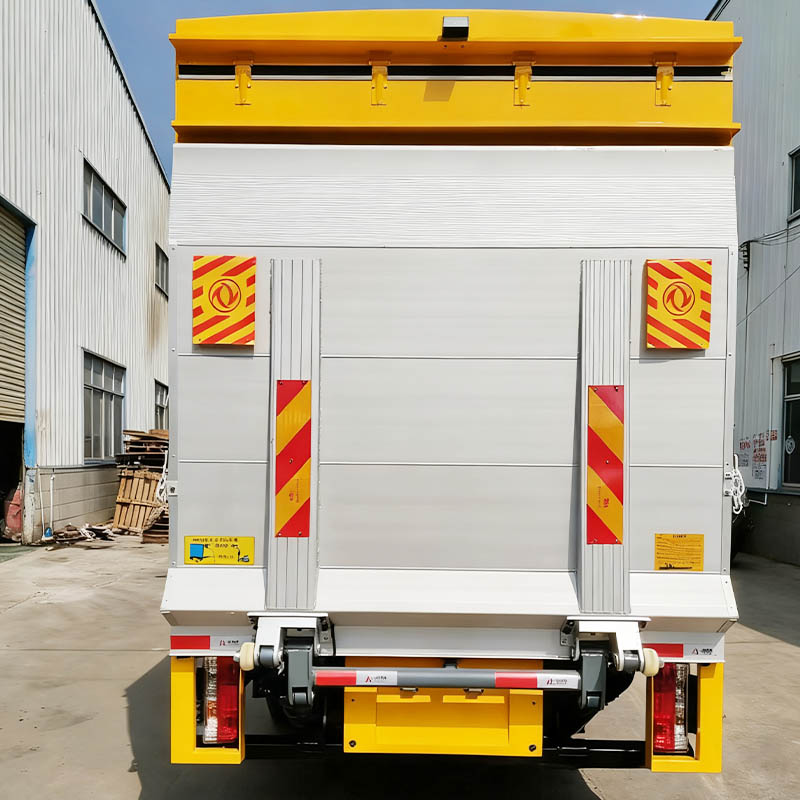
Targeting the mainstream urban delivery load requirements of 1-3 tons, Hyundai tailgates utilize a high-strength steel frame combined with aluminum alloy skin or composite material panels, ensuring load-bearing capacity while controlling weight. For example, some electric tailgates have a rated load of 1500kg, yet are 20% lighter than traditional steel structures, helping to reduce overall vehicle fuel consumption and carbon emissions. The hinge and support systems have undergone fatigue testing and can withstand over 50,000 opening and closing cycles, ensuring long-term reliable operation under high-frequency use of 30-50 times per day.
4. Intelligent Integration Enables Efficient Management
With the widespread adoption of vehicle networking technology, intelligent tailgate systems can now be integrated with fleet management platforms. For example, tailgate opening status can be uploaded to the dispatch center in real time for verifying delivery completion; abnormal opening records can serve as evidence for cargo damage accountability; and battery monitoring functions remind maintenance personnel to perform timely maintenance to prevent malfunctions en route. Some high-end models also integrate LED lighting, cameras, or anti-slip pedals, further enhancing safety and convenience during nighttime or rainy weather operations.
5. Supporting Green Logistics and Enhancing Lifecycle Value
While the initial investment in tailgates is slightly higher, the efficiency improvements, accident reductions, and labor savings they bring allow for a cost recovery within 6-12 months. More importantly, it reduces vehicle wear and fuel waste caused by repeated climbing and sudden stops for loading and unloading, aligning with the development direction of urban green logistics. In the EU and North America, compliant delivery vehicles with tailgates have become standard equipment for priority passage in urban low-emission zones.
A vehicle tailgate is far more than just a simple "plate of metal"; it is a crucial fulcrum for the efficient, safe, and sustainable operation of urban logistics. From reducing workplace injury rates to accelerating delivery pace, from energy conservation and emission reduction to intelligent management, modern tailgate systems are injecting tangible safety guarantees and operational efficiency into urban logistics vehicles through systematic solutions. It will continue to play an indispensable role in the future smart urban distribution system.
1. Improved Loading and Unloading Efficiency and Reduced Destination Time
One of the core pain points of urban logistics is "tight time windows and limited parking." Traditional manual tailgates require manual climbing and laborious opening, which is not only time-consuming but also prone to cargo slippage due to improper operation. Logistics vehicles equipped with hydraulic or electric lifting tailgates can achieve smooth one-button lifting and lowering under driver control, lowering the cargo floor to ground level, allowing pallet trucks and trolleys to directly enter and exit the cargo area. This design significantly reduces handling steps, shortening single loading and unloading time by over 30%, making it particularly suitable for convenience stores and community outlets without loading docks. For "last-mile" delivery, the quick-opening side tailgate or double-opening tailgate allows for simultaneous operation by two people, further improving turnaround efficiency.
2. Enhanced Operational Safety and Reduced Risk of Work-Related Injuries
According to industry statistics, the logistics loading and unloading process is a high-incidence area for occupational injuries, with back sprains and falls accounting for a very high percentage. The vehicle tailgate effectively reduces the intensity of manual handling and the risk of falls by eliminating height differences and stabilizing the platform. The high-quality tailgate is equipped with anti-pinch sensors, an automatic locking mechanism, and emergency descent protection, which can immediately pause operation in the event of a sudden power outage or obstacle detection to prevent pinching injuries or equipment damage. Furthermore, when closed, the tailgate forms a complete sealed structure with the vehicle compartment, and with a high-strength locking system, it can prevent accidental opening during driving, ensuring the safety of goods and other road users.
3. Adaptable to Diverse Load Capacities, Balancing Lightweight Design and Rigidity
Targeting the mainstream urban delivery load requirements of 1-3 tons, Hyundai tailgates utilize a high-strength steel frame combined with aluminum alloy skin or composite material panels, ensuring load-bearing capacity while controlling weight. For example, some electric tailgates have a rated load of 1500kg, yet are 20% lighter than traditional steel structures, helping to reduce overall vehicle fuel consumption and carbon emissions. The hinge and support systems have undergone fatigue testing and can withstand over 50,000 opening and closing cycles, ensuring long-term reliable operation under high-frequency use of 30-50 times per day.
4. Intelligent Integration Enables Efficient Management
With the widespread adoption of vehicle networking technology, intelligent tailgate systems can now be integrated with fleet management platforms. For example, tailgate opening status can be uploaded to the dispatch center in real time for verifying delivery completion; abnormal opening records can serve as evidence for cargo damage accountability; and battery monitoring functions remind maintenance personnel to perform timely maintenance to prevent malfunctions en route. Some high-end models also integrate LED lighting, cameras, or anti-slip pedals, further enhancing safety and convenience during nighttime or rainy weather operations.
5. Supporting Green Logistics and Enhancing Lifecycle Value
While the initial investment in tailgates is slightly higher, the efficiency improvements, accident reductions, and labor savings they bring allow for a cost recovery within 6-12 months. More importantly, it reduces vehicle wear and fuel waste caused by repeated climbing and sudden stops for loading and unloading, aligning with the development direction of urban green logistics. In the EU and North America, compliant delivery vehicles with tailgates have become standard equipment for priority passage in urban low-emission zones.
A vehicle tailgate is far more than just a simple "plate of metal"; it is a crucial fulcrum for the efficient, safe, and sustainable operation of urban logistics. From reducing workplace injury rates to accelerating delivery pace, from energy conservation and emission reduction to intelligent management, modern tailgate systems are injecting tangible safety guarantees and operational efficiency into urban logistics vehicles through systematic solutions. It will continue to play an indispensable role in the future smart urban distribution system.